How Albuquerque Bernalillo County Water Utility Authority is Reviving the Rio Grande
The Albuquerque Bernalillo County Water Utility Authority is the largest water and wastewater utility in New Mexico, serving more than 650,000 residents in the greater Albuquerque area. Its Southside Water Reclamation Plant (SWRP) discharges approximately 55 million gallons per day of high-quality treated effluent into the Rio Grande, maintaining roughly 6.5 miles of connected river even during periods of upstream drying — a lifeline for the endangered Rio Grande Silvery Minnow (RGSM) and the broader riparian ecosystem.
In keeping with its longstanding commitment to environmental stewardship, the Water Authority launched the SWRP Outfall Restoration Project to restore the river's natural hydraulic processes, reconnect the river to its floodplain, and enhance habitat for threatened and endangered species. Spanning approximately 11 acres, the project delivers habitat improvements for the RGSM, Southwestern Willow Flycatcher, and Yellow-billed Cuckoo, as well as the monarch butterfly. Community access was woven into the project from the start, with new hiking and biking trails prioritized alongside the ecological goals.
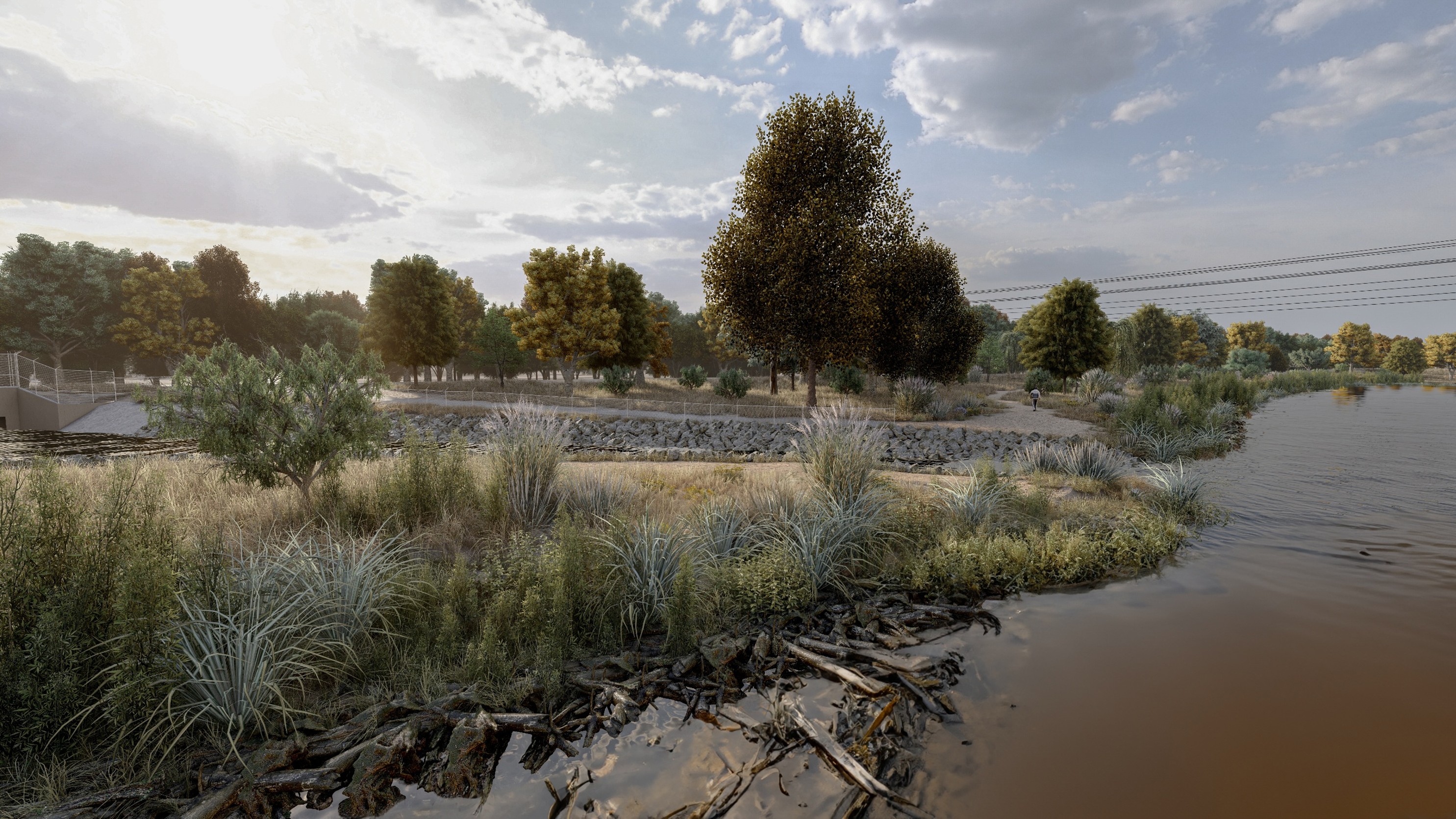
Prior to restoration, the project area was densely overgrown with invasive species, and the east riverbank had eroded into a steep shelf due to decades of upstream flood control. The Water Authority employed sustainable, bioengineered construction practices throughout — repurposing felled trees into rootwad structures that create low-velocity spawning zones for RGSM, stabilize the riverbank, and improve effluent mixing with main channel flows. Recognizing that traditional floodplain design benchmarks may no longer be realistic in a changing climate, the Water Authority partnered with design contractor Hazen and Sawyer to analyze historic flow data and develop two terraced floodplains designed for inundation at both 900 cfs and 1,500 cfs — supporting current habitat standards while adapting for future conditions.
The revegetation plan, developed collaboratively with the U.S. Fish and Wildlife Service and City of Albuquerque Open Space Division, resulted in the removal of invasive vegetation and installation of over 33,000 native plants, including milkweed species critical to monarch breeding and shade trees to support the long-term health of the bosque canopy. The project site lies within the South Valley neighborhood, a historically disadvantaged community, and more than 3,000 linear feet of new pedestrian trails were added to improve river access. Educational signage and integration into the Water Authority's fourth-grade field trip program will extend the project's reach for years to come.
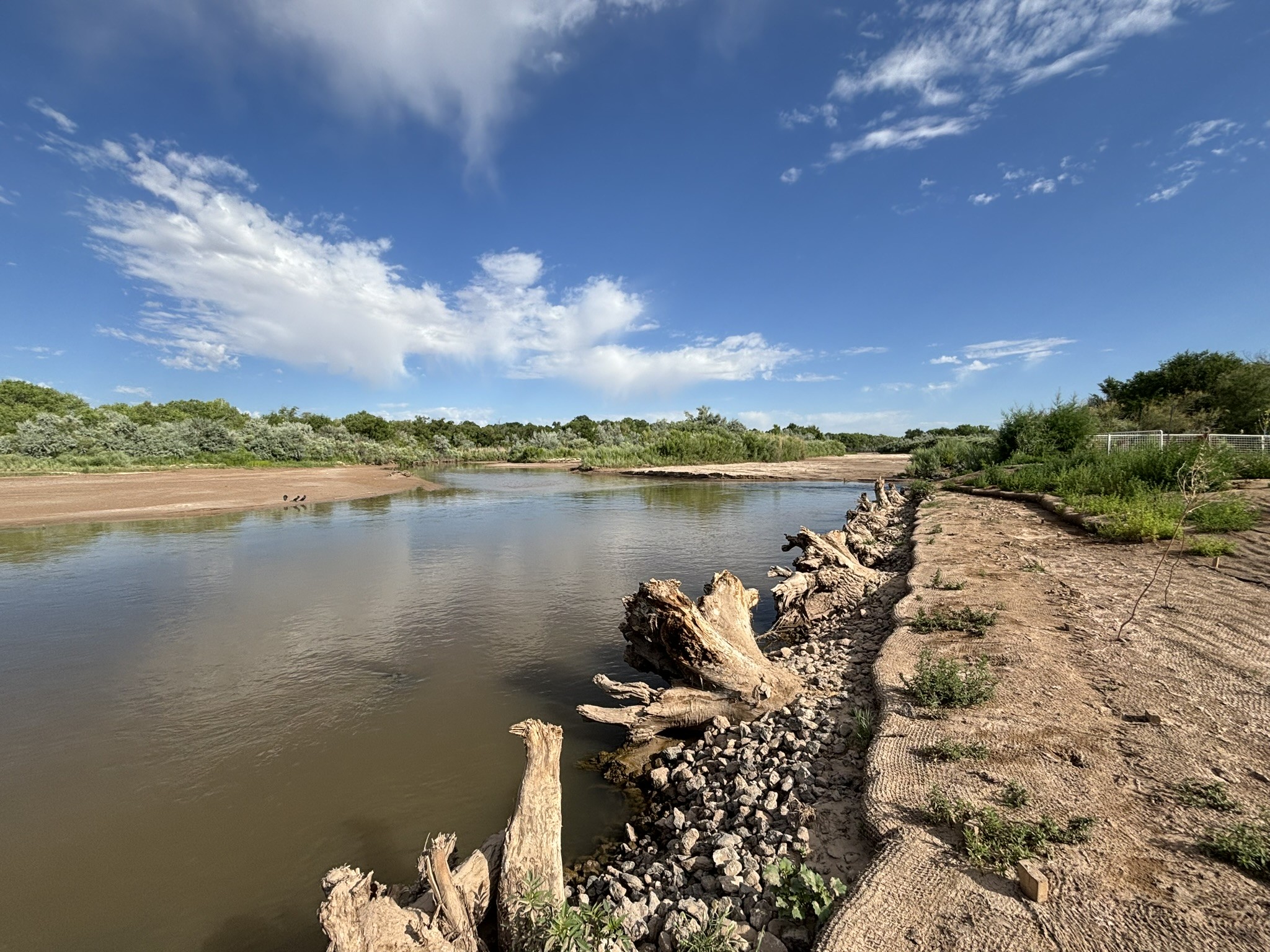
From the outset, the project was shaped by close collaboration with the U.S. Fish and Wildlife Service, U.S. Army Corps of Engineers, and Bureau of Reclamation — an approach that enabled the NEPA process to be completed within a year, concurrent with final design. Early results are already encouraging, and community members are actively using the new trails, minnows have been observed among the rootwad structures, the 900 cfs floodplain terrace has already seen inundation following a spring rain event, and post-construction surveys have identified large willow stands — a key indicator of floodplain success.
NACWA awarded the Albuquerque Bernalillo County Water Utility Authority a 2026 National Environmental Achievement Award in the Operations & Environmental Performance category for its impactful program. Congratulations to everyone involved!