PFAS Contamination a Focal Point as House Agriculture Committee Approves Farm Bill
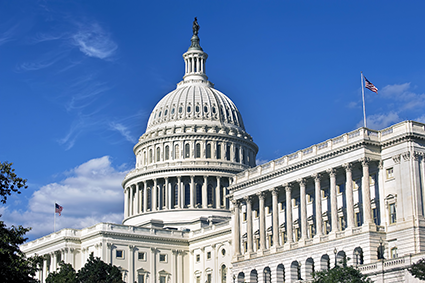 The U.S. House of Representatives Agriculture Committee approved its long awaited farm bill this week, advancing legislation that would make significant changes to federal conservation funding and address growing concerns around PFAS contamination in agriculture.
The farm bill—legislation that typically provides a five-year authorization for federal agriculture and nutrition programs—was last reauthorized in 2018, and its programs have operated under a series of extensions since the end of 2023.
A Congressional Budget Office cost analysis indicates that the bill would reallocate nearly $1 billion in funding from a popular conservation initiative to other U.S. Department of Agriculture (USDA) programs. The proposal is largely similar to the version that advanced out of committee in May 2024, but it reduces almost $1 billion of last year’s funding boost to USDA’s Environmental Quality Incentives Program (EQIP) over the next five fiscal years.
Despite that reduction, the bill still provides $1.5 billion more for EQIP than the 2024 version, representing a 54 percent increase in the program’s permanent baseline if enacted, according to committee sources. EQIP provides farmers with technical and financial assistance to improve water, air, and soil quality and to mitigate the impacts of natural disasters.
PFAS and Biosolids Research Provisions
The bill includes language modeled after Rep. Marie Glusenkamp Perez’s (D-Wash.) Research for Healthy Soils Act, elevating PFAS as a high priority agricultural research issue within USDA programs. Specifically, the bill would make research on per and polyfluoroalkyl substances (PFAS) and microplastics on farmland a priority focus area for USDA research and extension activities.
Under the bill, USDA would be authorized to support research examining the presence, behavior, and impacts of PFAS and microplastics in land applied biosolids and compost, including studies on concentrations and chemical composition, how wastewater treatment and composting processes affect these substances, their fate and transport in soil and water, and their potential uptake by crops or livestock. The legislation would also support research into mitigation and remediation strategies for contaminated soil and water systems.
In addition, the bill would designate PFAS research as a Center of Excellence focus area, directing USDA supported centers to engage in research, extension, and education activities related to food quality and safety. This includes studying the uptake of PFAS into food, the presence of microplastics in biosolids, and the feasibility of reducing harmful contaminants in agricultural products.
The legislation would further direct USDA to coordinate with the Department of Defense on research aimed at mitigating the impacts of PFAS contamination on farmland, particularly in areas adjacent to military installations where PFAS releases have occurred. This interagency coordination would support efforts to better understand contamination pathways and develop strategies to protect agricultural land and food systems.
PFAS Relief for Farmers Act
Specifically, funds authorized under the amendment could be used by states to:
Provide financial assistance to affected farmers;
Build capacity for PFAS testing of soil or water sources;
Monitor blood levels to help individuals make informed health decisions;
Upgrade or purchase equipment to ensure farms remain viable during or after PFAS contamination;
Develop alternative production systems or remediation strategies;
Create educational programs for farmers experiencing PFAS contamination; and
Research soil and water remediation systems and assess their viability for agricultural operations.
The amendment would also establish a USDA task force charged with identifying additional USDA programs where PFAS contamination could be added as an eligible activity, helping to leverage existing resources and improve coordination across federal and state responses. The task force would also provide technical assistance to states to support effective implementation.
At the time of publication, it remains unclear whether the Pingree amendment was adopted as part of the committee reported bill.