Who We Are
For 50 years, the National Association of Clean Water Agencies (NACWA) has been the nation’s recognized leader in legislative, regulatory and legal advocacy on the full spectrum of clean water issues, as well as a top technical resource for water management, sustainability and ecosystem protection interests.
NACWA represents public wastewater and stormwater agencies of all sizes nationwide. The Association's unique and growing network strengthens the advocacy voice for all member utilities, and ensures they have the tools necessary to provide affordable and sustainable clean water for all.
Our vision is to represent every utility as a NACWA member, helping build a strong and sustainable clean water future.
What We Offer
Community
Our ever-growing member community is our greatest strength, with member utilities of every size--small, medium and large--and affiliates from every region of the US. The Association's multiple venues for in-person & digital peer-to-peer networking, high-impact events & work groups/committees, national awards programs, dedicated staff and more allow members to choose their level of engagement, and help take their organizations to the next level.For more information visit Member Benefits
Advocacy
As the nation’s recognized leader in legislative, regulatory and legal advocacy, we are the clean water sector's collective voice to EPA, Congress and government agencies nationwide. With open communication and a collaborative environment, ensure that NACWA's representation is inclusive and pragmatic as well as potent and forward-looking.
For more information visit Advocacy & AnalysisResources
Our wide array of publications provide practical, usable information for clean water utilities and affiliates to innovate and improve their operations, while maintaining affordability for all the communities they serve. Our regular advocacy alerts, legislative and regulatory news & updates, legal references, white papers and more ensure that clean water utilities and affiliates have the cutting knowledge base to make big decisions and plan for a clean water future.
For more information visit ResourcesCity of Dayton’s Urban Agriculture Grant Program Strengthens Communities and Supports Clean Water Goals
The City of Dayton’s (Ohio) Urban Agriculture Grant Program, launched in 2012, is an innovative initiative that merges stormwater management with community empowerment. Coordinated by the Water Department and the Community Engagement umbrella of the City’s Planning, Neighborhoods, and Development Department, the program provides urban growers with the opportunity to use finished Dayton Water and collected rainwater to support gardens that deliver environmental and community benefits. These efforts help restore biodiversity, increase green space, and address food insecurity across the city.
By offering up to $2,500 for infrastructure and $500 for water use, the program helps remove some of the financial barriers associated with converting vacant lots into productive gardens. These green spaces contribute to runoff reduction, improved soil health, and climate impact mitigation. To be considered for funding, applicants must incorporate Best Management Practices (BMPs) to ensure erosion control and water quality improvements for Dayton’s rivers and streams.
Dayton’s population reflects a rich tapestry of racial and ethnic diversity. As of 2025, approximately 38% of residents identify as Black or African American, 6.8% as multiracial, 2.3% as other races, and 1.2% as Asian, with 51% identifying as White. This diversity is also reflected in the city’s immigrant communities, which are supported through initiatives such as Welcome Dayton, a city-led program that promotes integration by expanding access to education, health services, and economic opportunities. Immigrant-owned businesses and cultural events have become vital to Dayton’s economy and social fabric, while organizations such as El Puente and Cross Over Community Development provide mentorship and resources to refugee and immigrant families.
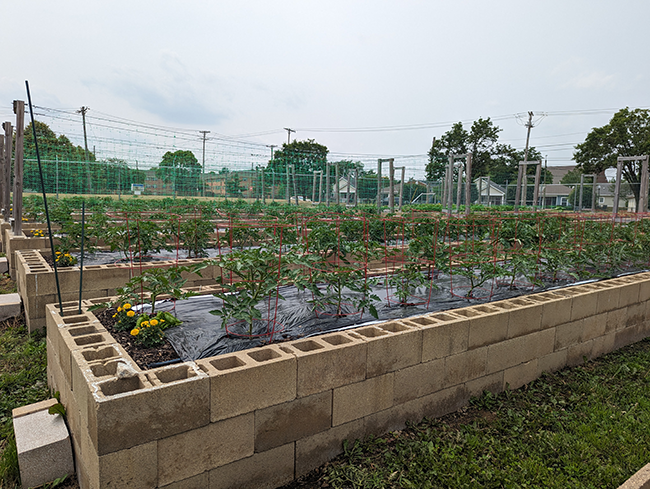
Food insecurity remains a pressing issue in Dayton, particularly in historically marginalized neighborhoods. In 2022, 14% of households in Montgomery County and one in four children in Dayton were food insecure. West Dayton, a predominantly Black community, has been disproportionately affected by food deserts due to historic redlining and disinvestment. The closure of grocery stores in these neighborhoods has further limited residents’ access to fresh, nutritious food.
The Urban Agriculture Grant Program directly addresses these challenges by supporting gardens in underserved and immigrant-rich areas. These gardens not only provide culturally relevant produce but also serve as hubs for education, mentorship, and community connection. Participants often donate excess harvests to local food banks, reinforcing the program’s role in combating hunger.
To date, Dayton’s Urban Gardens have grown to 41 locations, serving communities throughout the city. The program continues to expand, helping support neighborhoods where access to fresh food and green space is most needed.
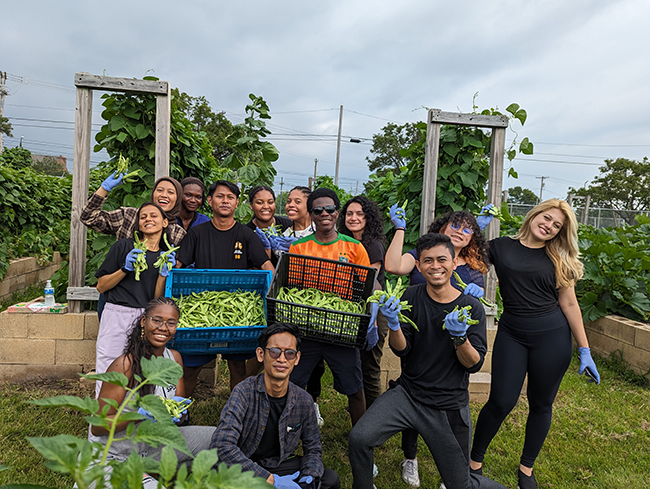
The City of Dayton’s Urban Agriculture Grant Program demonstrates how a practical, community-focused initiative can address stormwater management, food insecurity, and equity at the same time. By supporting urban gardens with water access and infrastructure funding, the program helps reduce runoff, improve water quality, and expand green space in underserved neighborhoods. It also engages a diverse population—including immigrant communities and residents in food deserts—by enabling them to grow culturally relevant produce and contribute to local food banks.
By removing financial barriers, strengthening community ties, and promoting environmental stewardship, the program supports food security and sustainable practices through ongoing education. Its measurable impact on water quality, public health, and neighborhood resilience demonstrates how clean water programs can be leveraged to support inclusive, sustainable urban development.
NACWA awarded the City of Dayton Department of Water a 2026 National Environmental Achievement Award in the Community Leadership category for its impactful program. Congratulations to everyone involved!
Board Of Directors
NACWA's Board of Directors embodies the clean water sector's most accomplished leadership, informed by decades of collective experience and expertise in water utility operation and management. The Board leads NACWA's governance, allowing it to serve its members with focus and integrity.
Staff Directory
The Association is its people. And NACWA's dedicated staff defines the organization's commitment to passionate advocacy, forward thinking leadership and ethical service to members and the clean water community as a whole. They're dedicated and energetic. They're also a lot of fun. Give us a ring...
Member Agencies & Affiliates
The strength of NACWA is its member agencies and affiliates, from publicly-owned wastewater treatment agencies to corporate affiliates from throughout the clean water management chain. Our unique and growing network strengthens the advocacy voice for all members, ensuring they have the tools and expertise necessary to help shape the clean water landscape both locally and nationally.
Committees
NACWA’s committee structure invites Association members to work collectively to shape national clean water policy. NACWA’s committees not only help develop the Association's positions on policy and legislation, they help build and foster NACWA's peer-to-peer networking strength, while achieving key initiatives that benefit all members.
Awards
Each year, NACWA recognizes the outstanding commitment, innovation and achievements of individuals and agencies through our national awards programs. From contributions to environmental protection, to diligence in compliance, to even intangible positive impact. NACWA is honored to highlight service excellence within the clean water sector.
Join NACWA
Engage and collaborate with member utilities of all sizes—small, medium and large—with affiliates/stakeholders from all regions of the country. Membership is not only a path to improving operations or enhancing professional development, it’s a unique opportunity to join the strongest unified voice for shared clean water interests nationwide.